Geodetické měření v terénu

We map the real world so you can design the digital one.

We specialise in geodetic data acquisition and laser scanning for Scan to BIM workflows across the Czech Republic. Our team delivers precise, reliable spatial information on terrain and built assets — the foundation your design projects depend on.

14 regions|100+ projects|DGN · DWG · IFC
Services

Surveying services for designers and engineers

Our services cover the full spectrum of modern design workflows — from precise planimetric and altimetric documentation to intelligent building models. We deliver data in the structure and quality that streamlines your downstream design phases.

Planimetrics & altimetry

Topographic Surveying

We survey planimetrics and altimetry from small parcels to large-scale linear infrastructure — roads, residential developments and industrial sites. All deliverables are supplied in fully compatible DGN, DWG or DXF formats.

DGNDWGDXF
3D laser scanning

Scan to BIM

We create structured BIM models from laser scans. Using laser scanning, we capture precise point clouds and process them into structured building models in IFC, RVT or 3D DWG formats. Every deliverable is a clean, noise-free vector model.

IFCRVT3D DWG
Advisory & optimisation

Consulting & Methodology

We help you find the most efficient path to accurate spatial data. From advising on public procurement specifications to ensuring full compatibility of survey deliverables with your internal processes and standards.

How we work

From field to final deliverable

01

Field survey

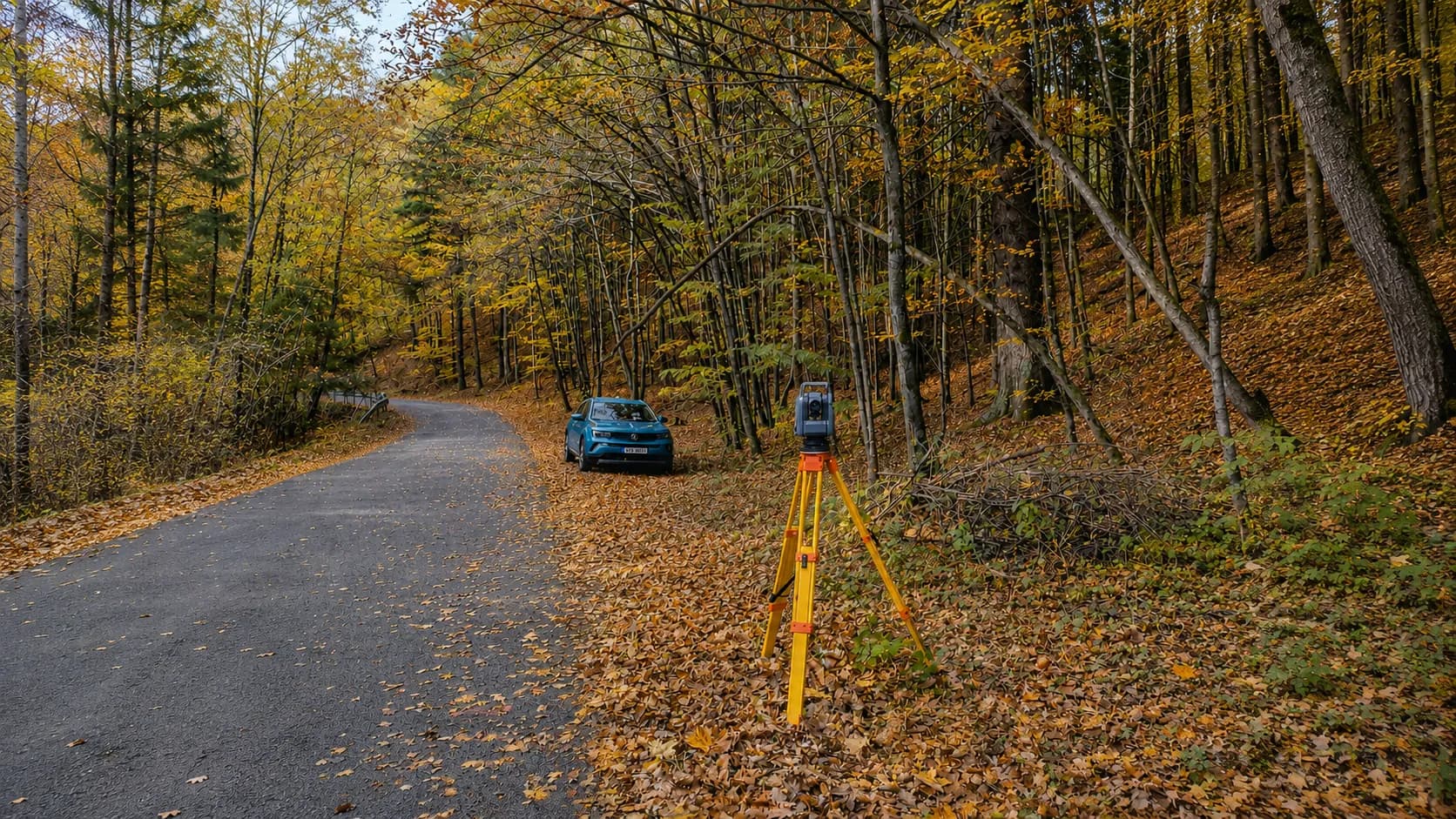
Planimetric and altimetric data capture with total station and GNSS

02

Data processing

Coordinate computation and digital map production

03

Quality check

Internal data review and output verification

04

Deliverables

DGN/DWG/DXF files per your specifications

We adapt our schedule to your project timeline.

About

Where traditional surveying meets modern technology

Our goal is to provide designers, architects and developers with deliverables that go beyond raw point data — structured, logical and precise foundations for their design work. We cover both conventional planimetric and altimetric surveying as well as modern Scan to BIM outputs. Based in the Vysočina region, we provide land surveying services across the Czech Republic — Prague, Brno, Ostrava and all 14 regions. We regularly work with international design firms, road authorities and architectural practices on projects throughout the country.

Our equipment
SOKKIA iX-1500

Robotic total station

Distance accuracy±1 mm + 2 ppm
Angular accuracy1" (0.3 mgon)
Nivel System Point 3

GNSS receiver

RTK accuracy (H)±8 mm + 1 ppm
RTK accuracy (V)±15 mm + 1 ppm
FARO Orbis Premium

Mobile 3D laser scanner

Accuracy (static scan)±2 mm
Range120 m
S-JTSK coordinate system|Bpv height datum|3rd accuracy class per ČSN 01 3410
MicroStation·BricsCAD V26
DGNDWGDXFIFCRVT
Railway corridor topographic survey
Portfolio

Our work

Examples from completed projects. Every deliverable is properly layer-structured and standards-compliant.

01Linear infrastructure · Pardubice Region
Technical survey
Orthophoto
Orthophoto
Technical survey

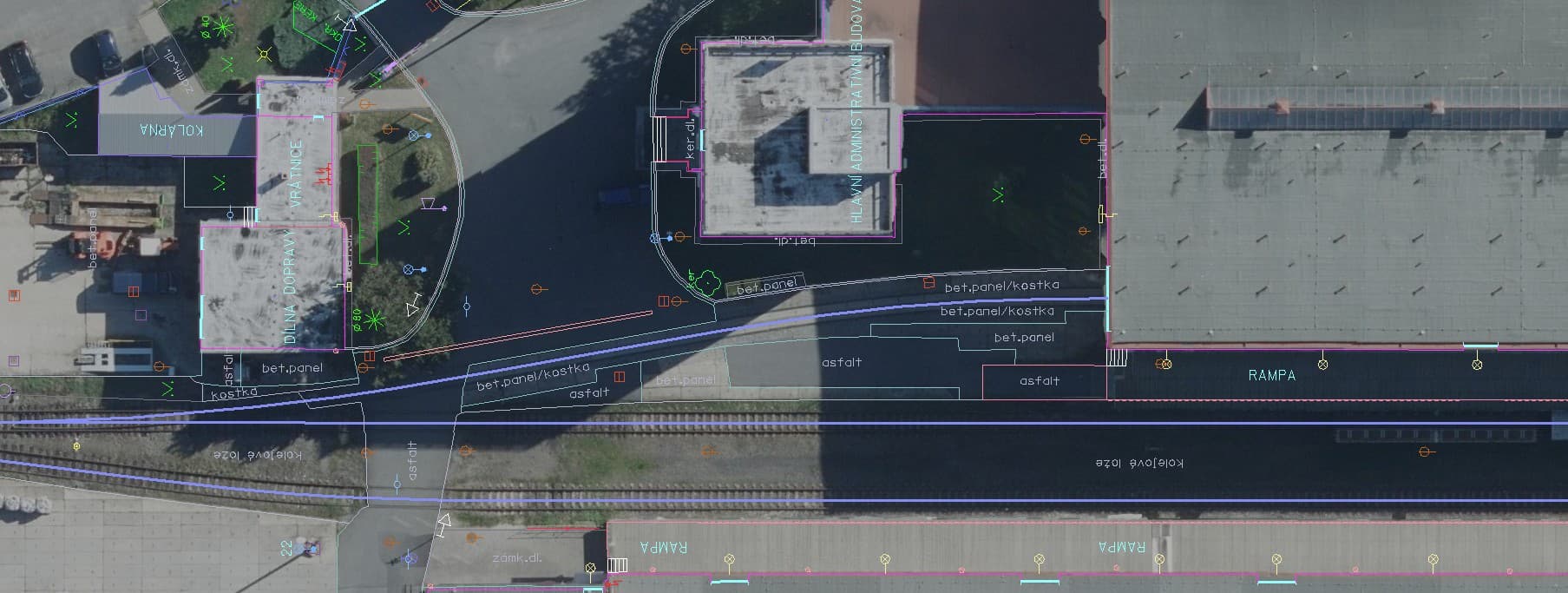
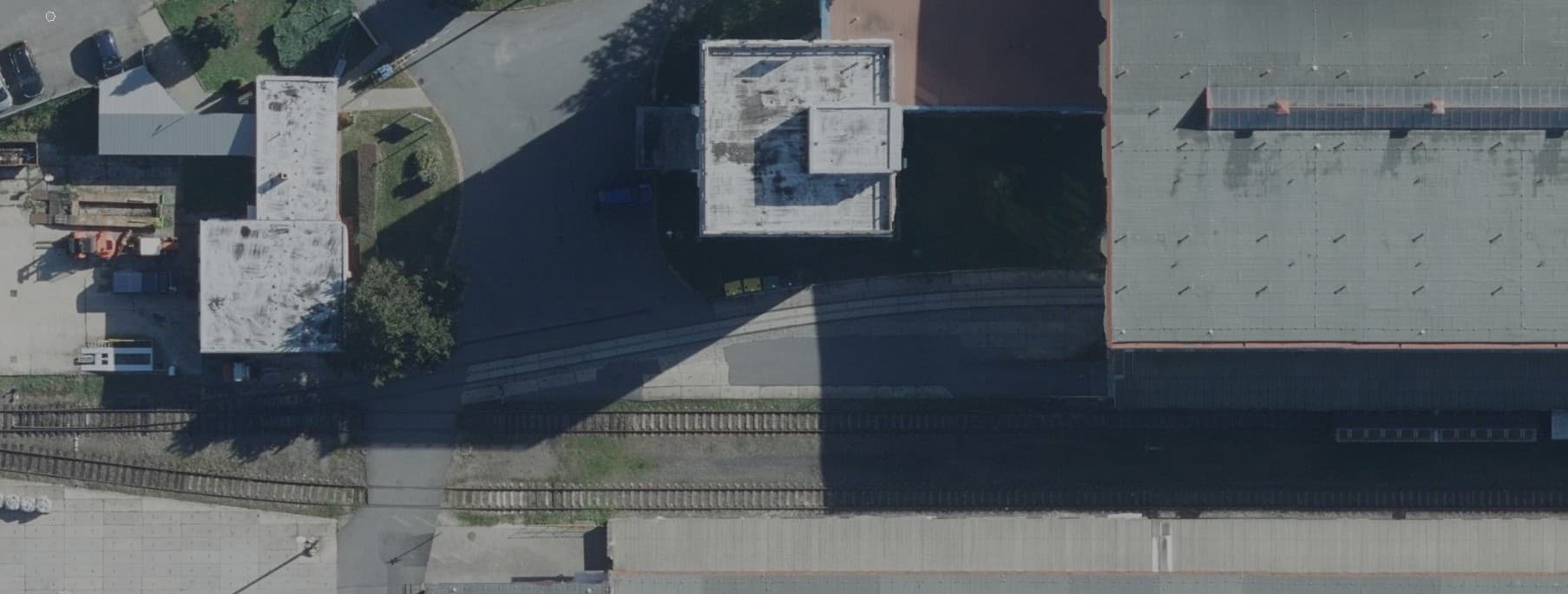
A design firm was planning a new storage facility within a Czech Railways complex in the Pardubice Region. As a subcontractor for the geodetic survey scope, we carried out planimetric, altimetric and utility infrastructure mapping across 5.5 ha — underground services, connections and surface features throughout the site. The deliverable was a technical map in DGN and DWG formats, used as part of the design documentation.

02Village centre · Olomouc Region
Planimetric survey
Orthophoto
Orthophoto
Planimetric survey

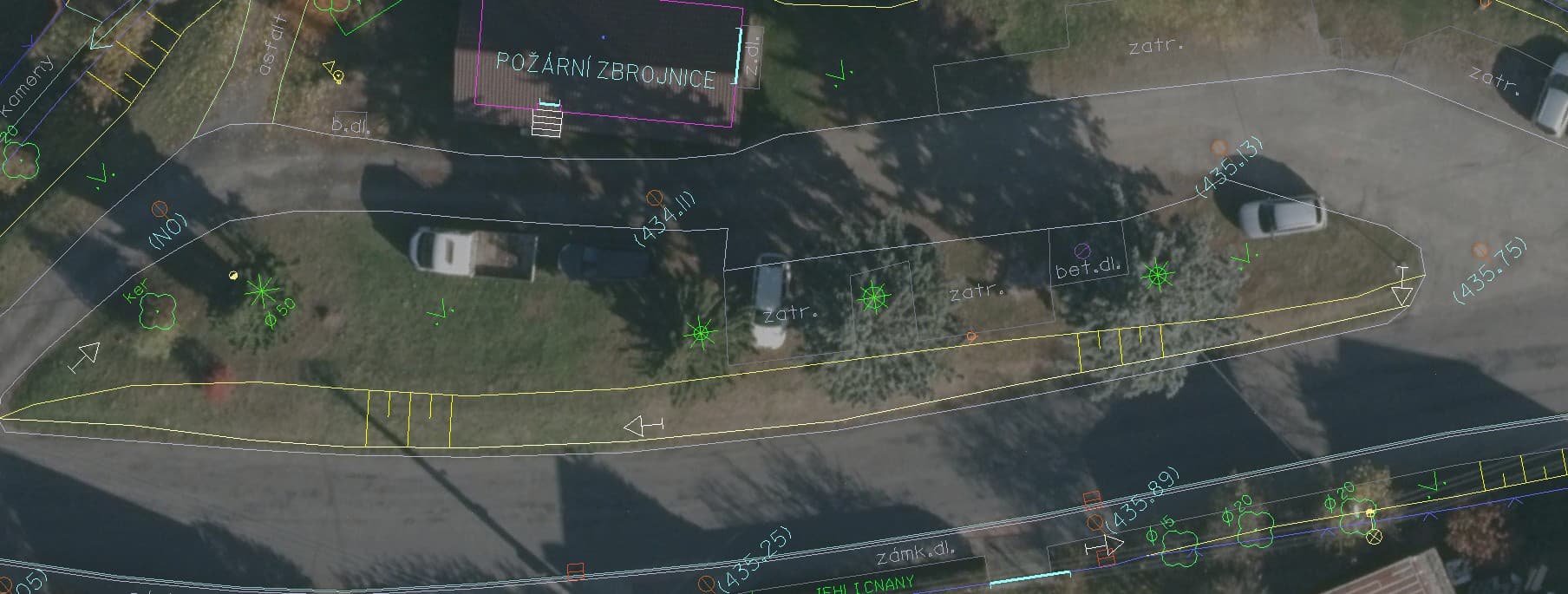
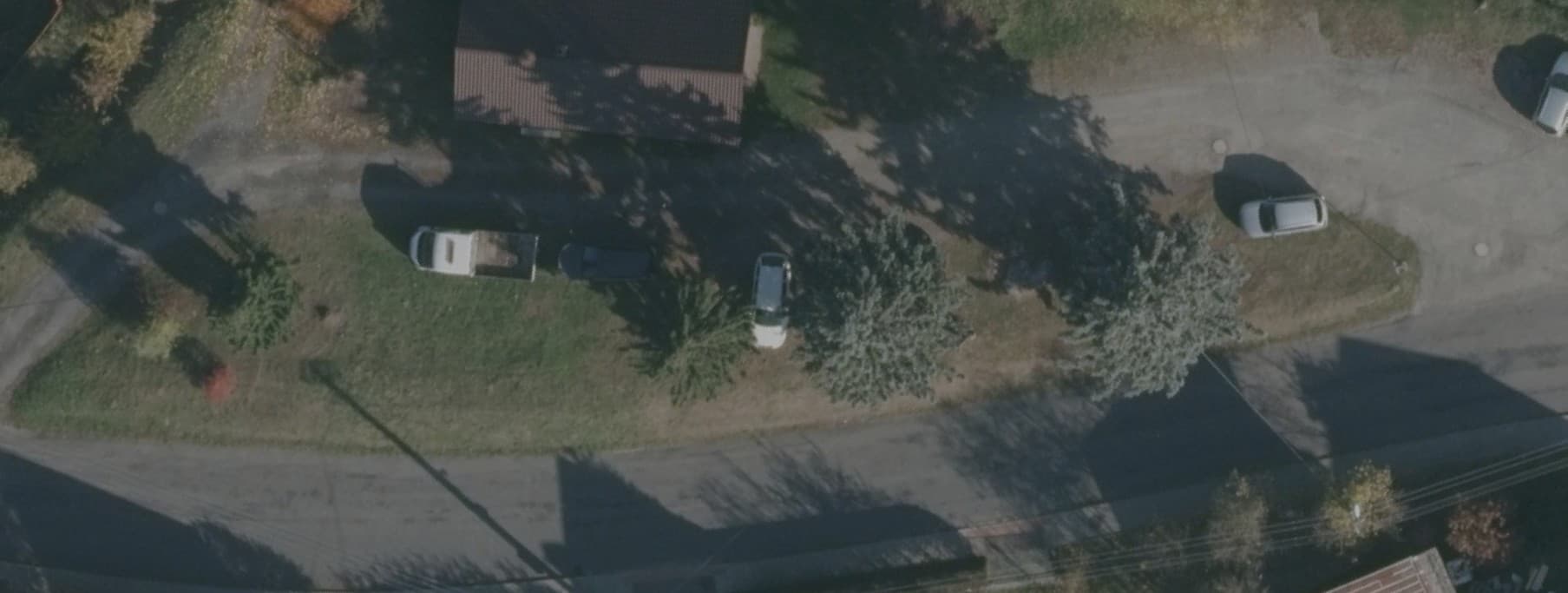
For the revitalisation of a village public space in the Olomouc Region, we provided geodetic survey data to a design firm preparing the project documentation. We surveyed a 0.5 ha area covering planimetrics, altimetry and utility infrastructure — including manhole depths in the S-JTSK and Bpv coordinate systems. DGN and DWG deliverables were used directly as the design base.

Projects delivered across 14 regions

Each point represents a location where we completed a survey.

// In-house software

Tools we build ourselves

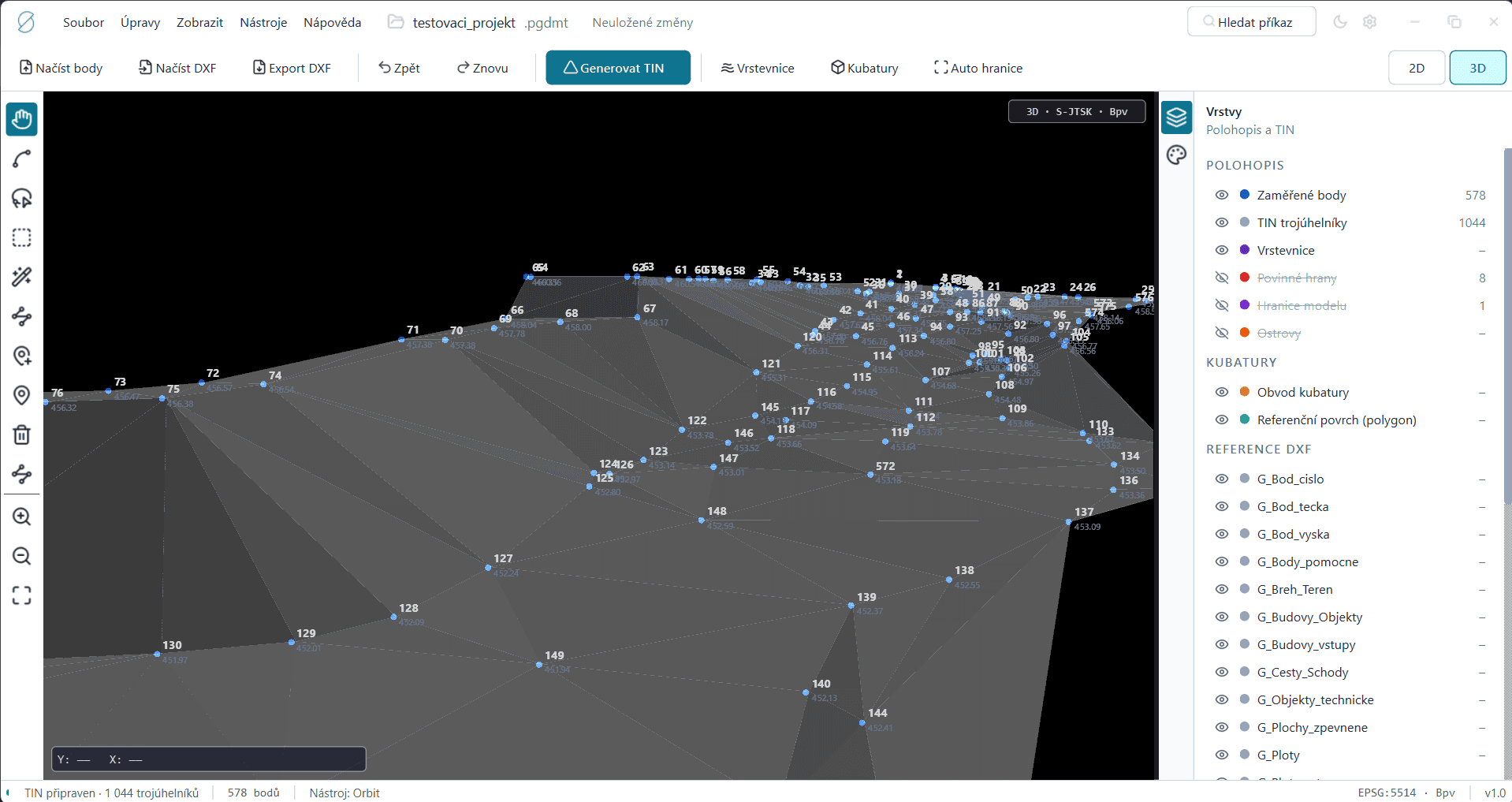
For jobs where off-the-shelf CAD falls short, we build our own specialised tools. Right now we are developing a desktop application for digital terrain models that speeds up work with survey data.

PointGrid DMT

Desktop application for digital terrain models

In development
TINContoursEarthworksBreaklinesDXF
PointGrid DMT preview — 3D triangulated terrain model with contour lines

Triangulation

Build a TIN from surveyed points with full support for breaklines. DXF export included.

Contour lines

Automatic contour generation from the TIN with configurable interval and smoothing.

Earthworks

Cut-and-fill volume calculation by comparing two surfaces — a quick earthworks balance check for your project.

Built alongside our everyday practice. For anyone who needs a quick 3D terrain model without reaching for a heavyweight CAD package.

Notify me when it is ready

/* Fast, accurate, built by the people who use these tools every day. */

Frequently asked questions

What our clients most often ask

Services, project workflow and technical specifications of deliverables.

01Our services
What kind of geodetic base map do I need for my design documentation?

The standard base for design documentation is a purpose-built survey map — a geodetic survey of the planimetry and altimetry of the area of interest produced for a specific project. The planimetric component captures the horizontal layout of all terrain features (buildings, roads, fences, vegetation, surface markers of utility networks), while the altimetric component adds elevation information in the form of contours or spot heights.

What does the project base map you deliver contain?

A standard project base map (purpose-built survey map) includes the planimetry — buildings, roads, fences, vegetation, terrain breaks and surface markers of utility networks; the altimetry in the form of contours or spot heights; property boundaries taken from the land register; and object descriptions. We adapt the scope to your project's requirements. On request we add manhole depths, digitise utility operator sketches and deliver outputs in a layer structure matching your CAD standard.

What is Scan to BIM and what exactly do I get as a deliverable?

Scan to BIM is a method where a structured 3D building model is created from a laser scan (point cloud). The output is a clean, vector 3D model in IFC, RVT or 3D DWG format. The model contains structural elements (walls, slabs, floors, columns, staircases), openings (windows, doors) and on request also MEP elements. It is not a raw point cloud — it is a model ready for your design work.

What types of buildings is Scan to BIM suitable for?

Scan to BIM is most commonly used for refurbishments where current design documentation is missing — historical buildings, industrial objects, office and residential buildings, cultural heritage sites. It is also suitable for building surveys, facility management or preparing documentation for change of use. If you are not sure whether Scan to BIM is suitable for your project, we will advise you.

What accuracy does the laser scanning have?

We scan with the FARO Orbis Premium with ±2 mm accuracy in static mode and a range of 120 m. The resulting 3D model typically has geometric accuracy of ±5 mm for main structural elements. For special requirements (detailed façade surveys, deformation analysis) we discuss the accuracy individually.

At what level of detail do you deliver the BIM model?

We define the modelling scope using the LOD (Level of Detail) scale. As standard, we deliver models at LOD 200 to LOD 300 — structural and architectural elements with accurate dimensions and placement. On request we add visible MEP elements or detailed architectural elements (LOD 350). We build the model by manual tracing from the point cloud, which guarantees a clean vector output. The specific scope is confirmed before work begins, as it has a direct impact on price and timeline.

What is the difference between a point cloud and a 3D model?

A point cloud is the raw output from laser scanning — millions of points with X, Y, Z coordinates that faithfully capture the surfaces of the scanned object. It is like a 3D photograph of reality. A 3D model (the Scan to BIM output) is created by manual tracing from the point cloud — it is a structured, clean vector file with distinguished structural elements that you can design with directly. If you need the point cloud as a separate deliverable (E57, LAS, RCP formats), we will supply it separately.

02Working with us
Where do you operate?

We survey across the entire Czech Republic. We currently have completed projects in all 14 regions — from linear infrastructure through industrial sites to surveys of public areas in village centres.

Do you work as a subcontractor for design firms?

Yes, this is our primary model of collaboration. We provide geodetic survey data as a subcontractor for design firms preparing project documentation. We are used to communicating directly with the designer, adapting to their requirements for format and structure, and meeting their schedule.

What do you need from me to prepare a quote?

Ideally: a sketch of the area of interest (even an approximate one on an orthophoto), the required survey scope (planimetry, altimetry, utilities, manhole depths…) and any special requirements on layer structure. The more precise the brief, the more precise the quote. If you are not sure about the scope, we will be happy to advise.

How long does a geodetic survey and data processing take?

The duration depends on the size and complexity of the area of interest. We always adapt timelines to your project schedule and mutual agreement — including the option of priority processing.

How is the final deliverable handed over?

Deliverables are handed over electronically. Each delivery includes a technical report. Printed outputs can be arranged by agreement.

Do you also survey utilities and technical infrastructure?

Yes. As part of planimetric and altimetric surveying, we routinely measure surface markers of utility networks — manholes, lids, hydrants, distribution cabinets, overhead lines. On request we also measure manhole depths. Digitising utility operator sketches and incorporating them into the final map is provided as part of the commission.

Can you also survey during construction, not just before the project?

We primarily specialise in pre-project surveys (planimetry, altimetry, technical maps) and Scan to BIM for refurbishments. Control measurements during construction or as-built surveys are handled on a case-by-case basis — get in touch and we will discuss it.

How do you set the price for a geodetic survey?

The price depends on the type of service, the size of the area of interest, terrain difficulty, required deliverables and location. Each project is individual, so we do not work with a flat-rate price list. Based on your brief we will prepare a no-obligation quote with itemised breakdown, usually within 48 hours.

03Deliverables and formats
In which formats do you deliver survey data?

As standard we deliver in DGN, DWG and DXF formats. For Scan to BIM projects we use IFC, RVT and 3D DWG. We adapt the format to your working environment — just tell us which software you design in.

How is layer structure handled in DGN/DWG?

We use a systematic layer structure derived from the practice of design firms. Planimetry, altimetry, utilities, cadastral boundaries and descriptive texts are always in separate layers with logical naming. If you have your own layer standard or company template, we will be happy to follow it — send it to us before work begins.

Is the output compatible with MicroStation / AutoCAD / Revit?

Yes. Outputs are prepared so that they can be opened and further processed in MicroStation, AutoCAD and Revit without issues. Files are always in the S-JTSK coordinate system (EPSG:5514) and Bpv height datum, so coordinates and heights fit directly in your CAD without any transformation.

What does the technical report you supply with each project contain?

The technical report is an integral part of every project. It includes a description of the survey scope, an overview of the instruments and methods used, data on the coordinate and height systems, the accuracy class achieved according to ČSN 01 3410, a list of control points used and an overview of output files.

Can you deliver data in a coordinate system other than S-JTSK?

The standard is S-JTSK / Bpv, which is required by most design documentation in the Czech Republic. In justified cases (linking to a local construction system, WGS 84 for foreign investors) we can transform the data. Please specify the requirement when placing the order.

Contact

Get in touch

We would be happy to prepare a no-obligation quote for your project.

We respond to enquiries within 48 hours.